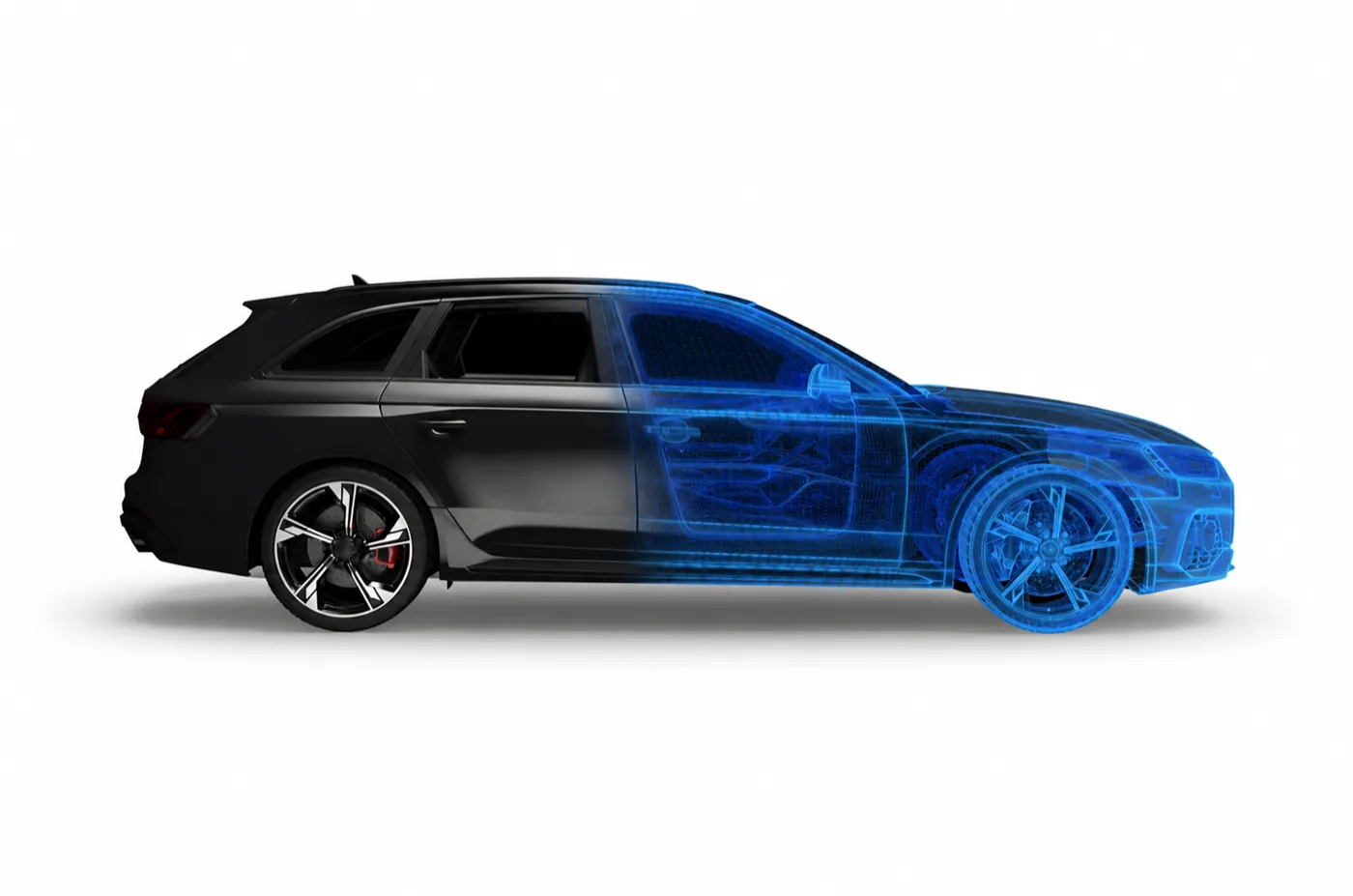
Car in a calibration workshop facing an ADAS calibration target board

How ADAS Calibration Works

ADAS calibration is the realignment procedure that brings a car's cameras, radars and sensors back into manufacturer tolerance after they've been disturbed. It's needed after a windscreen replacement, bumper repair, sensor swap or accident, and it's how systems like AEB, lane keep assist and adaptive cruise know where they are pointing.

ADAS calibration in plain English

ADAS calibration is the realignment of safety-system sensors so they point at the right reference points. Forward cameras, front and rear radars, ultrasonic sensors and side-mirror cameras all have to sit at precise angles measured in millimetres and fractions of a degree.

Anything that disturbs them (windscreen replacement, bumper-off work, badge swap, even some wheel alignments) leaves the sensor pointing at the wrong reference, which is when the system either flags a fault and turns itself off, or worse, keeps running on bad data.

The calibration itself is a structured procedure. Either the car is positioned in front of target boards at precisely-measured distances (static procedure), or the car is driven on a specific route at controlled speeds while the system aligns itself against road markings (dynamic procedure). Many modern cars need both, in sequence, for a complete calibration.

The job ends with documentation. Every calibration our network completes ends with a calibration certificate confirming which systems were calibrated, the method used, and that the post-calibration scan showed every ADAS function back within tolerance. This is what insurers in the UK ask for when releasing a windscreen or accident claim.

From our technicians' work

Calibration always starts with a diagnostic scan. That scan often surfaces damage the owner didn't know about: a cracked radar bracket, a sensor knocked loose, wiring disturbed during the original repair. The workshop flags anything found before the calibration itself begins.

The procedure also needs stable conditions. Calibration software runs for the full session, and a dropping battery voltage can fail the job partway through. Workshops in our network keep a charger on the car so the procedure runs clean start to finish.

Static vs dynamic calibration

Two procedure types. Most modern calibrations involve one, the other, or both.

Static calibration uses physical target boards positioned at exact distances and angles relative to the car's centreline. The camera or radar looks at the targets, the calibration software detects them, and the sensor's alignment is corrected against the known reference. This procedure needs level ground, controlled lighting and clear space around the car.

Some makes (most VW Group, BMW, Mercedes radar work) need static target alignment to be done correctly. Many can't be calibrated dynamically at all.

Static ADAS calibration setup: the car faces a target board placed at an exact, measured distance, squared to the car's centreline so the forward camera and radar align to a known reference.

Dynamic calibration is drive-based. The car is taken on a structured route at specific speeds while the sensor watches road markings or other reference features and self-aligns. Some procedures need to run for a set distance (typically 15 to 30 minutes), others until the system confirms calibration is complete.

Most forward-camera recalibrations after windscreen work use dynamic procedure. Vauxhall's Opel Eye system is dynamic-only on most platforms.

Both, in sequence. Many modern cars need static alignment first (so the sensor starts from a known reference), then dynamic confirmation on the road. Most premium platforms (Audi, BMW, Mercedes) and post-collision multi-system jobs sit here.

Which procedure your car needs is set by the make, model and year, and what part of the system has been disturbed. It's not the customer's call. The technician determines the right procedure based on the manufacturer specification for that vehicle.

What ADAS calibration is NOT

Worth being precise on what the procedure does and doesn't include, since the terms get muddled.

Not a diagnostic scan. Reading fault codes is the first step of a calibration but it's also a standalone service. If your dashboard light came on without any recent repair, sometimes the right answer is a diagnostic scan first, not a full calibration. Our pre-calibration scan tells you which one you actually need.

Not a repair. ADAS calibration doesn't fix damaged hardware. If a radar bracket is bent or a camera is physically damaged, the part needs replacing first, then calibrating. The calibration alone won't bring a broken sensor back online.

Not a wheel alignment. Wheel alignment corrects suspension geometry. ADAS calibration corrects sensor alignment. The two are different services using different equipment, though some accredited workshops in our network offer both.

** Manufacturers specify calibration as a mandatory step after windscreen, bumper and post-collision work on cars equipped with the relevant systems. Skipping it leaves the safety systems running on bad reference data, which is the route to phantom braking, late lane warnings, and inactive AEB.

Most UK insurers now treat the calibration certificate as required documentation for releasing the underlying claim.

Frequently asked questions

The calibration itself usually runs 60 to 120 minutes, depending on whether your car needs static, dynamic, or both procedures. Dynamic procedures take longer because of the road-test portion, which adds 15 to 30 minutes. Static-only jobs and most single-system recalibrations finish at the shorter end. Post-collision jobs with multiple systems can take half a day.

Effectively yes when a sensor has been disturbed. Manufacturers specify it as mandatory in their repair procedures. UK insurers ask for a calibration certificate to release windscreen and accident claims. And legally, driving a car with a known-faulty safety system can be classed as a vehicle defect under current MOT rules. Skipping it isn't a practical option.

No. The procedure needs proprietary, often manufacturer-specific diagnostic equipment, target boards positioned to exact distances, and pre and post-calibration scan documentation. The tooling alone costs £25,000 to £75,000 or more depending on coverage. Even setting that aside, the calibration certificate has to be issued by a qualified technician for insurers and MOTs to accept it.

No. Fixed tier pricing applies regardless of procedure type. £199 covers windscreen calibration (static, dynamic or both). £349 covers radar/sensor calibration. £499 covers a full system reset across every ADAS module on the car. The tier is set by what work has been done, not by how complex the underlying procedure is.

The post-calibration scan would have flagged that, and the procedure would have been re-run before the job was signed off. If a warning appears days or weeks later, it's almost certainly a new fault, not a calibration that 'didn't take'. Either way, raise it with the workshop or with us. Calibration certificates issued through our network include re-check rights when the issue is calibration-related.

Most routine wheel alignments don't disturb ADAS. The exception is when work touches the steering angle sensor, which sits on the steering column and feeds data into lane keep and adaptive cruise calculations. A steering angle reset is a sub-procedure inside a wider ADAS calibration on some platforms.

If your wheel alignment job involved adjustment to camber, caster or thrust angle on a car with active lane assist or ACC, mention it in the enquiry and we'll check whether a follow-up calibration is needed.

Need an ADAS calibration?

Submit your number plate and what's been done to the car. We come back with the procedure your car needs, the tier price, the nearest accredited workshop, and the soonest slot.

Get a Free Quote