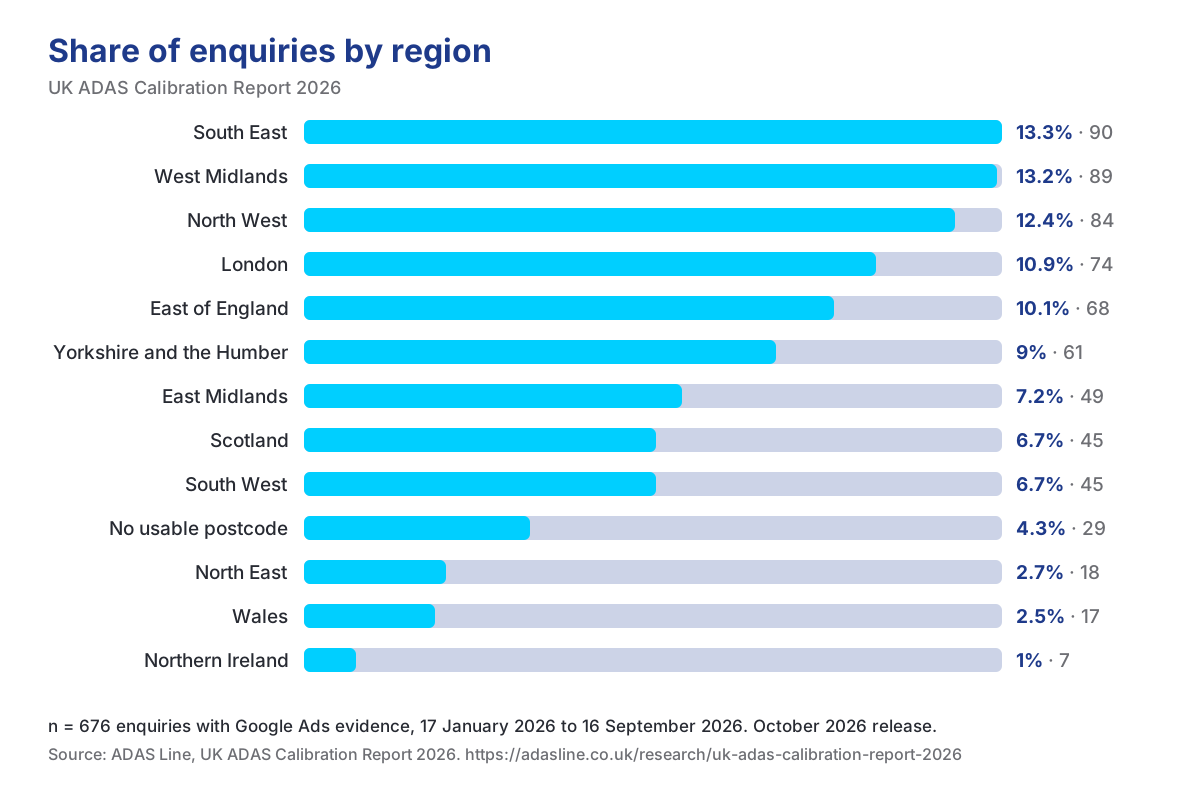
Every one of the 12 regions sent enquiries
The South East and the West Midlands are level at the top, with 13.3% (90 enquiries) and 13.2% (89). The North West follows at 12.4%. London, the East of England, Yorkshire and the Humber, the East Midlands, Scotland, the South West, the North East, Wales and Northern Ireland are all in the data. 4.3% of enquiries had no usable postcode.
Fault codes drivers quote
Each code was quoted by at least one driver in the sample; no counts are published for them.
| Code |
What it means |
| C110300 |
ACC fault at the front radar sensor |
| U023500 |
Lost communication with the cruise control distance sensor |
| P2583-76 |
Millimetre wave radar misalignment |
| C10C700 |
Front radar sensor maladjusted |
For body shops and repairers, repair work is the trigger in 37% of enquiries
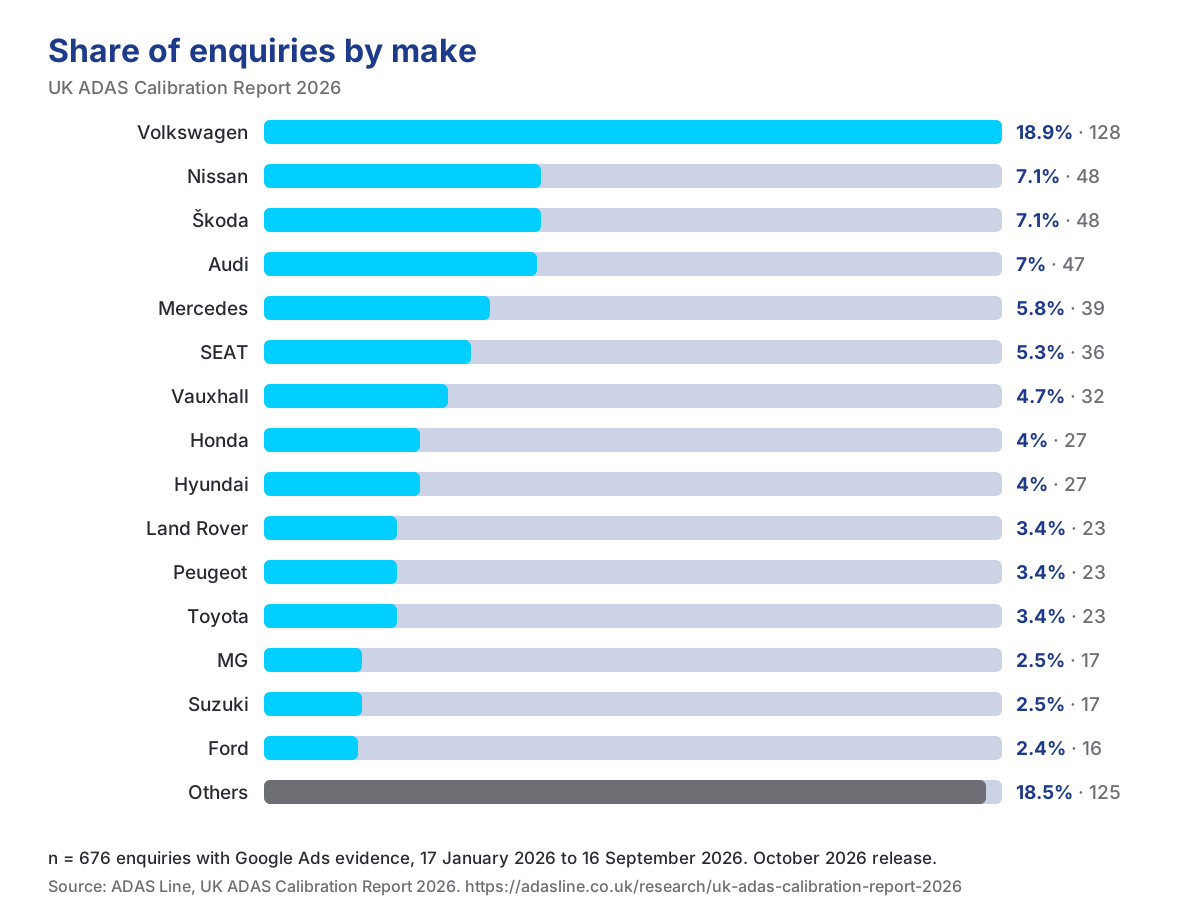
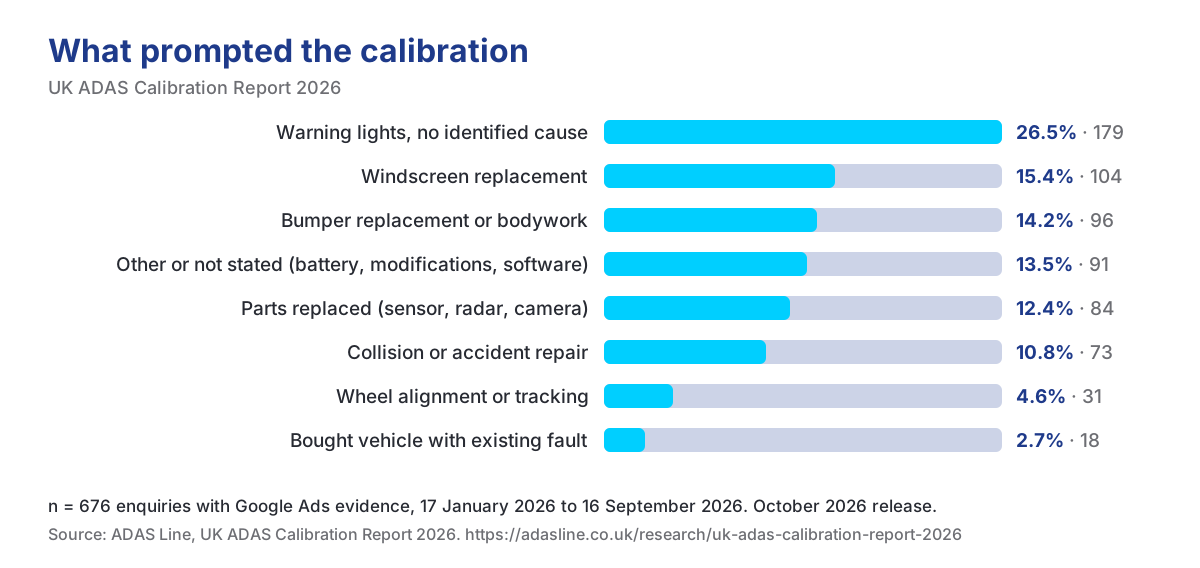
Bumper work, replaced parts and collision repair together account for 253 of 676 enquiries. Bumper replacement or bodywork is the largest of the three at 14.2%. Across all enquiries, the most frequent models are the Golf at 11.8%, the SEAT Leon at 4.1% and the Škoda Superb at 4%.
For fleet managers, 40% of enquiries involved a VW Group vehicle
271 of 676 enquiries involved a VW Group vehicle. The Golf accounts for 11.8%, the Passat for 2.8% and the Transporter for 0.9%. Warning lights with no known cause are the largest single trigger at 26.5%. Those drivers named no repair, collision or windscreen job beforehand.
For insurance assessors, collision repair is the trigger in 11% of enquiries
73 enquiries named a collision or an accident repair. Windscreen replacement accounts for 15.4%, 104 enquiries. Bumper or bodywork with no accident stated accounts for 14.2%.
For glass replacement providers, a windscreen replacement is the trigger in 15% of enquiries
104 enquiries, 15.4%, named a windscreen replacement, done or booked. Several described a fitter or garage that couldn't finish the camera calibration. UK Car Glass booking data shows 27 in every hundred windscreen bookings involved ADAS glass in April to September 2026.
Data: UK Car Glass
Method: 676 enquiries, each tied to a click on a search ad
The campaign. Every enquiry in the sample came through one generic search campaign on Google Ads. It drew 5,072 clicks. It paused for part of June and for a few days in August, so the months aren't equally covered. The ads landed on the homepage (50% of clicks), the find-a-centre page (30%), the mobile calibration page (12%) and the pricing page (6.3%). Make pages reached through ad sitelinks took 1.2% and other pages 0.5%. Searches naming any of 13 makes (Audi, BMW, Ford, Honda, Hyundai, Kia, Mazda, Mercedes, Nissan, Subaru, Toyota, VW and Volvo) were excluded from the campaign.
Ad evidence. Each enquiry needed evidence of a click on the campaign. From 16 June 2026, that's a Google Ads click id recorded with the enquiry (282 enquiries). Before that date, it's a Google Analytics lead event within 1 minute of the enquiry, from a session that began with a click on the campaign, with no lead from another source in the same hour (394 enquiries).
The sample. 920 enquiries arrived between 17 January 2026 and 16 September 2026, after test submissions and repeats within 24 hours were removed. 676 carried ad evidence. 151 came from other sources and 93 couldn't be tied to a source. Neither group is counted.
Triggers. Each enquiry has one primary trigger from 8 categories with written definitions. An AI model assigned each label from the form answers and the customer's own description, under the definitions below. A second model then labelled a random sample blind as a check. The two agreed on nearly all of them, and the first labels were kept.
- Bought vehicle with existing fault. The customer bought the vehicle and the fault, the damage or the missing calibration was already there when they got it. Covers used purchases, auction cars, imports and repaired write-offs (Cat S, Cat N).
- Collision or accident repair. The vehicle was in a collision, accident, crash or impact with another vehicle, an object or an animal while the customer had it, or it is being repaired after one, including through an insurer.
- Windscreen replacement. The windscreen was replaced, removed or refitted, or is about to be, and no collision is given as the reason.
- Parts replaced (sensor, radar, camera). An ADAS component was itself replaced, swapped for a new or used unit, or removed and refitted: a radar, camera, parking or blind-spot sensor, control unit, wing mirror, steering angle sensor or its bracket.
- Bumper replacement or bodywork. A bumper, grille, badge, panel or other bodywork was removed, refitted, repaired, replaced or repainted, with no collision stated and no ADAS unit itself replaced.
- Wheel alignment or tracking. Wheel alignment, tracking, steering or suspension work was done, or the vehicle hit a kerb or a pothole, and the fault followed.
- Other or not stated (battery, modifications, software). Either another cause is stated, or no event and no fault is stated at all. Stated causes here include a battery replacement or flat battery, a software update or coding, a retrofit or modification, a tow bar, a recall, water ingress and theft damage.
- Warning lights, no identified cause. The customer reports a warning light, a dashboard message or a driver-assistance system that has stopped working or misbehaves, and gives no event that came before it, or says the cause is unknown.
Regions. Postcode area maps to one of 12 UK regions. Enquiries with no usable postcode are shown as unplaced. Any figure built on fewer than 5 enquiries is withheld.
Limits. This is one provider's data. It covers only people who searched and then enquired. A make's share mixes how many of its cars are on the road with how often they need calibration, and this data can't separate the two. Owners who typed one of the excluded make names never saw the ad, so those 13 makes may be under-counted against the rest.
Releases
- October 2026: 676 enquiries with Google Ads evidence, 17 January 2026 to 16 September 2026.
- 16 April 2026: 556 enquiry messages. Kept copy.
- March 2026: 436.